Hong Kong AI Voices 2026
The people Hong Kong hears on artificial intelligence, and the working systems, models and courses behind what they say.
Where AI claims meet working systems
Most of what Hong Kong hears about artificial intelligence describes what a model might do. Much less describes what happened when someone put one to work: whether it understood a Cantonese sentence with English mixed in, whether it scheduled a night of track maintenance safely, whether an attractive idea survived testing.
Those accounts matter more now that the decisions are live. In February 2025 the city released its first locally developed large language model, and organisations across Hong Kong are deciding where AI belongs in their own work.
The people on this list speak about AI from inside that work. Each can point to something of their own behind what they say: a system in daily use, a model released, a course approved, a service built on it, or a negative result published.
Selection criteria
Everyone here speaks or writes publicly about AI and has documented work of their own behind it. The list weighs that work over visibility or job title, runs alphabetically by surname, ranks nobody and implies no endorsement.
Augustin Chan

Photo: LinkedIn
"I aim to build AI systems that expand human capability without quietly eroding human agency."
In 2026 Augustin Chan published a paper whose abstract reports that 'the results are uniformly negative'. The hypothesis it tested was one he had put forward himself.
In January 2025 Chan released a framework arguing that the King Wen sequence, the traditional ordering of the I Ching's 64 hexagrams, anticipated ideas machine learning reached much later. The 2026 paper put that claim to experiment. He used the sequence to vary a small language model's learning rate and to order its training data, on two hardware platforms and across 30 random seeds. In every test the sequence either made training worse or made no measurable difference, and he released the code with the result.
The I Ching also runs through his products. He founded 8-Bit Oracle, an AI-assisted I Ching reading service, and is chief technology officer at Digital Rain Studios. He demonstrates his work at AI Tinkerers Hong Kong, where he has also hosted sessions.
Andy Chun
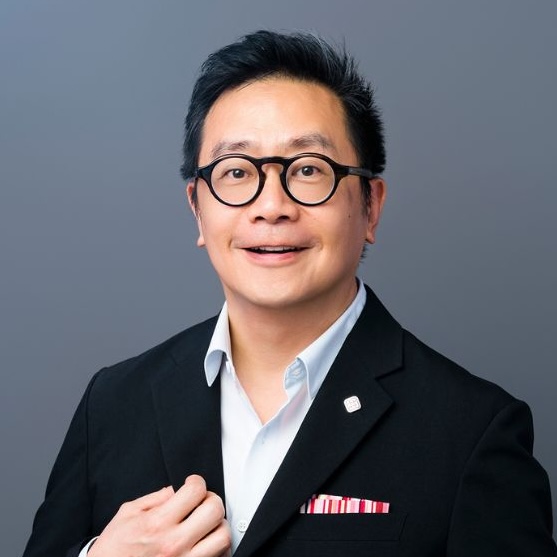
Photo: PolyU
Since July 2013, engineering works across Hong Kong's rail network have been scheduled by an AI engine that Andy Chun's team built for the MTR. The railway carries out more than 2,600 engineering works a week, according to Chun's own account of the project, and the engine fits them around one another and checks each schedule against safety and operating rules before crews go out. It replaced an earlier engine his team deployed on the subway in 2004, and in 2014 it won an Innovative Applications of AI award from the Association for the Advancement of Artificial Intelligence.
Chun built that record over 24 years at City University of Hong Kong, where he taught computer science and served as chief information officer, before six years leading technology innovation at Prudential. He is now Professor of Practice at the Hong Kong Polytechnic University, and he founded the Hong Kong Computer Society's AI Specialist Group.
Much of his public work is explanation. He writes columns for the Hong Kong Economic Journal, and in November 2025 he briefed Hospital Authority leaders on what AI means for healthcare.
Pascale Fung

Photo: HKUST
In March 2026 AMI Labs, the research company Yann LeCun co-founded after leaving Meta, raised US$1.03bn to build AI that learns from the physical world as well as from language. Its chief research and innovation officer is Pascale Fung.
She came to the role from Hong Kong, where she is chair professor of electronic and computer engineering and of computer science at the Hong Kong University of Science and Technology. Fung founded the university's Centre for AI Research in 2018 and directed it until 2024, and later held a senior research post at Meta's Fundamental AI Research lab. Her research on conversational AI and on ethical principles for AI systems has earned her fellowships of the IEEE, the Association for Computational Linguistics and the Association for the Advancement of Artificial Intelligence.
Guo Yike

Photo: HKUST
'Pre-training a large language model is like raising a child,' Guo Yike said in his opening remarks at the launch of HKGAI V3 in June 2026.
Guo directs the Hong Kong Generative AI Research and Development Centre, a government-funded venture led by the Hong Kong University of Science and Technology, where he has been provost since December 2022. On 25 February 2025 the centre released HKGAI V1, which HKUST describes as the city's first locally developed generative AI model. It works in Cantonese, Putonghua and English, and was built by fine-tuning every parameter of a DeepSeek model. Civil servants piloted it first. HKUST then became, according to The Standard, the first local university to trial it with students.
He has done much of the explaining himself, including a seminar in June 2025 at which he walked government staff through the model and its uses.
Alvin Ho

Photo: LinkedIn
Alvin Ho has described putting RFID tags on parcels at DealerSend so each one can be tracked, and feeding that data to AI models that keep refining delivery routes.
DealerSend, which he directs, is a Hong Kong and Shenzhen logistics company that stores, packs and ships orders for online sellers through more than 80 shipping channels. Since April 2024 it has offered a Shopify app that lets merchants get quotes and create shipments from their own stores. Ho has also set out what Hong Kong would need for the Northern Metropolis to work as an e-commerce logistics hub. A certified public accountant since 1999, he was made a chartered member of the Chartered Institute of Logistics and Transport in Hong Kong in September 2025.
Yolanda Ma

Photo: HKU
When Yolanda Ma asked the University of Hong Kong to make AI training compulsory on its Master of Journalism, the hardest question she expected was whether AI would last or prove to be 'just another buzzword'. She won the argument, and the course became mandatory for incoming students.
Ma joined HKU's Journalism and Media Studies Centre in 2023 after nine years with the United Nations Development Programme, in a career that had also taken in data journalism. She built a course on AI and media innovation, and in December 2024 the centre launched an AI and Innovation Concentration on the master's programme, which she leads. Its first cohort of 30 selected students began in September 2025, studying AI-assisted verification and newsroom automation among other skills.
She also runs a public conversation, moderating talks at HKU with the BBC's programme director for generative AI and with Karen Hao, author of Empire of AI.
Yolanda Wan

Photo: yoyobuilds
Yolanda Wan argues that AI teaching is only worth something if it goes beyond a list of tool names. What people need, she writes on her own site, is the judgement to decide which tool suits a piece of work and how to use it there.
She came to that view as a product manager in fintech and crypto, where she says she spent years translating between engineers, management and marketing teams. A University of Hong Kong graduate, she now runs AI courses, workshops and talks for professionals and companies, including one-to-one sessions for business owners. At FUTUREMODE in Taipei in September 2026 she spoke on building AI products for Hong Kong businesses, using examples such as internal knowledge bases and automated quotation systems. She says her AI teaching videos have drawn more than 8 million views.
Kevin Wong

Photo: Tatler Asia
One of Subanana's users filmed himself at 2am on the night he started using it, telling the camera he would never have to pull an all-nighter for work again. Kevin Wong has said nothing about the business has pleased him more.
Wong co-founded Datax in 2017 with classmates while studying business at the University of Hong Kong. It began by preparing data for AI developers before building tools of its own. Subanana, its main product, produces subtitles, transcripts and translations in more than 80 languages and converts spoken Cantonese into written Chinese. 'ChatGPT's strengths do not lie in Chinese or Cantonese,' Wong has said. Datax works from Hong Kong Science Park's Tseung Kwan O InnoPark and has introduced its speech-to-text and handwriting recognition to government departments.
He now writes Subanana's comparison guides under his own name, and states in each that he runs the product.
Chak Yeung
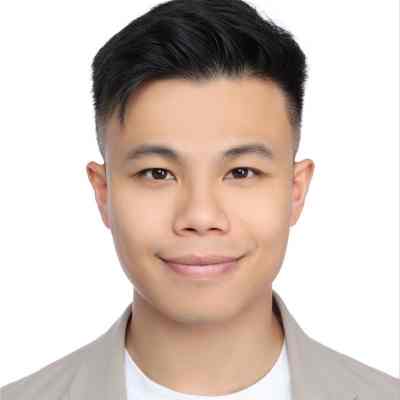
Photo: BNI
Chak Yeung thinks Hong Kong companies have moved past a shortage of AI tools and into a shortage of context. Opening DotAI's annual conference at K11 Atelier on 9 January 2026, he told an audience of more than 200 that 2026 would be the year AI is put to work. Firms, he argued, should stop polishing individual prompts and assemble the company data and standard procedures an AI agent needs to act on its own.
Yeung, whose Chinese name is 楊廣澤, co-founded DotAI in 2023 to teach practical AI and help organisations adopt it. The company says it has worked with more than 50 large companies and 3,000 learners, and refunds the full course fee to learners who complete 100 hours.
He takes the same approach outside the company. In April 2026 he presented a free Hong Kong Productivity Council seminar for NGOs on agent workflows, including how to write an agent specification with safeguards built in.
About this list
Nobody on this list was interviewed. Every claim comes from public sources, and each subject will be sent their own entry before publication and invited to correct anything factually wrong. Five details remain unconfirmed: how DealerSend applies AI in its operations, which rests on Alvin Ho's own posts; Augustin Chan's titles at 8-Bit Oracle and Digital Rain Studios, which come from event listings; Pascale Fung's current HKUST title, taken from a university page that may predate her move to AMI Labs; DotAI's client and learner figures, which are the company's own; and Yolanda Wan's career history and audience figures, which come from her own site.
Editorial methodology
ExpertProfile.AI selects recognised people through editorial research of publicly available information. Inclusion is not for sale and does not represent an endorsement, investment recommendation, or guarantee of future performance. Roles and affiliations can change; we welcome factual corrections and relevant additional evidence.
Help us keep this recognition accurate.
Suggest a factual correction, share public evidence, or nominate someone whose contribution should be considered.

Nominate an expert, request a correction, or sponsor a list.
Help us keep our discovery platform accurate, comprehensive, and valuable. Share an industry specialist deserving of recognition, help us maintain profile accuracy, or explore commercial alignment through vertical list sponsorships.
